
You’re cruising down the highway, feeling good, when you see it: a massive dump truck ahead, shedding gravel like a golden retriever sheds fur. You hear the dreaded tink-tink-tink as tiny stones pepper your front bumper. You pull over at the next exit to inspect the damage, and your heart sinks. A fresh constellation of tiny white dots-rock chips-now blemishes your otherwise perfect paint.
It’s a frustratingly common scenario. In the battle to keep our cars looking new, the world throws everything at them: rocks, road debris, bird droppings, and UV rays. Luckily, we have two heavyweight champions in the world of paint protection: Paint Protection Film (PPF) and Ceramic Coatings. But they are not the same. Choosing the right one depends entirely on your car, your budget, and how you drive. Let’s break it down.
What Exactly Is Paint Protection Film (PPF)?
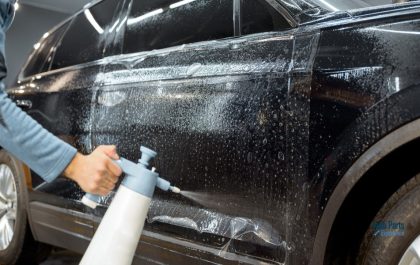
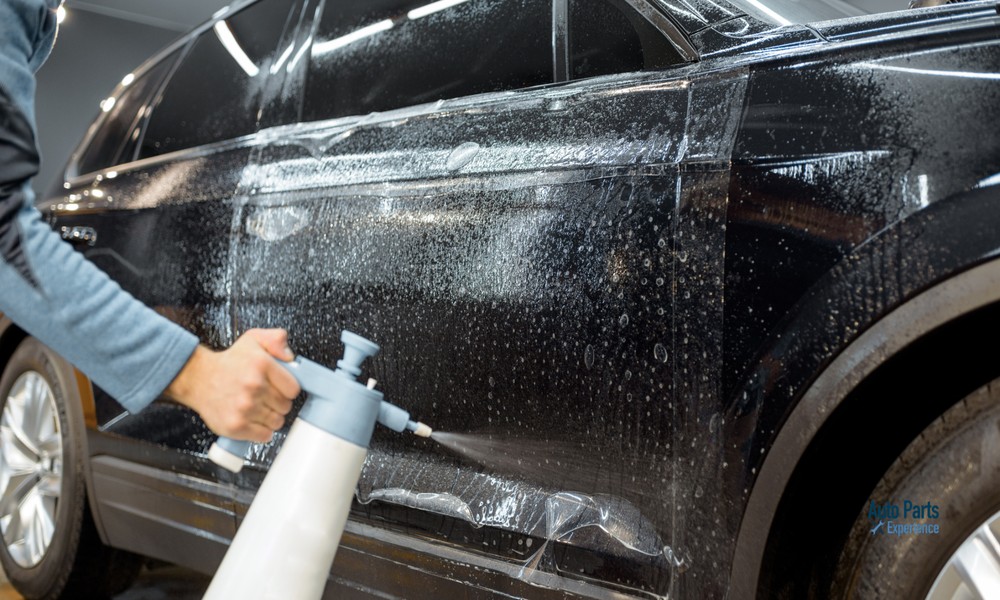
Think of PPF as invisible body armor for your car. It’s a transparent, durable, and flexible layer of thermoplastic urethane that’s applied directly to your vehicle’s painted surfaces. Its primary job is to absorb physical impacts. It’s the automotive equivalent of a screen protector for your phone-a sacrificial layer designed to take the hits so your precious paint doesn’t have to.
The key benefit of PPF is its resistance to physical damage. It’s your number one defense against:
- Rock chips from highway driving
- Light scratches from shopping carts or tree branches
- Swirl marks from improper washing
- Stains from bug guts and bird droppings
Modern, high-quality PPF often comes with “self-healing” properties. Minor scratches and scuffs on the film’s surface can actually disappear on their own when exposed to heat from the sun or a heat gun. It’s a remarkable technology that keeps the film-and your car-looking flawless.
How Ceramic Coatings Work on Modern Clear Coat
If PPF is body armor, a ceramic coating is a futuristic force field. It’s a liquid polymer, typically based on Silicon Dioxide (SiO₂), that is applied by hand to your car’s exterior. When it cures, it forms a chemical bond with your car’s clear coat, creating a hard, glass-like layer that is incredibly slick and hydrophobic (water-repellent).
A ceramic coating’s superpower isn’t impact resistance; it’s environmental and chemical resistance. It excels at protecting your paint from:
- UV rays that cause paint to fade and oxidize
- Chemical etching from acid rain, bird droppings, and tree sap
- Road grime, tar, and dirt make the car dramatically easier to clean
- Water spotting occurs as the hydrophobic surface sheds water with ease
The result is a car that stays cleaner for longer and exhibits an intense, candy-like gloss that wax can’t replicate. It makes washing your car faster and more satisfying, as dirt just seems to melt away.
Side-by-Side Comparison Table (PPF vs. Ceramic)
Let’s put these two technologies head-to-head to make the differences crystal clear.
|
Feature |
Paint Protection Film (PPF) |
Ceramic Coating |
|---|---|---|
|
Primary Protection |
Physical impacts (rock chips, scratches) |
Chemical & environmental (UV, acid rain, dirt) |
|
Best For |
Preventing physical damage in high-impact areas |
Enhancing gloss, ease of cleaning, and environmental defense |
|
Self-Healing |
Yes, most premium films can self-heal minor scratches |
No, it cannot repair existing scratches or absorb impacts |
|
Visual Finish |
Nearly invisible, can come in gloss or matte finishes |
Extremely high gloss, enhances paint depth and color |
|
Hydrophobic Property |
Moderate |
Excellent, causes extreme water beading and sheeting |
|
Durability |
5-10 years |
2-7+ years, depending on the product and maintenance |
|
Maintenance |
Regular washing; avoid pressure washing edges |
pH-neutral washes; occasional use of a silica-based topper |
Cost Breakdown & Ownership Math
Neither solution is cheap, but they should be viewed as an investment in preserving your vehicle’s value.
PPF is the more expensive option upfront. Protecting just the high-impact areas of a car (full front bumper, partial hood and fenders, side mirrors) can cost between $1,000 and $2,500. A full-body wrap on a standard sedan can run from $4,000 to $7,000 or more. The quality of the film drives the cost and, more importantly, the labor-intensive skill required for a perfect, seamless installation.
A professional ceramic coating is more accessible. The ceramic coating cost can range from $800 to $2,500+, depending on the vehicle’s size, the condition of the paint (which may require extensive correction beforehand), and the coating’s longevity. This investment saves you time on maintenance and money on waxes and sealants over the years.
Decision Tree – Which Solution Fits Your Lifestyle?
The best choice for you comes down to your priorities. Let’s look at a few common profiles.
Daily Driver in Harsh Climate
If your car is a daily workhorse that faces punishing commutes, heavy traffic, and unpredictable weather, impact protection is your top priority. You’re constantly at risk from road debris, tight parking lots, and environmental fallout.
Recommendation: PPF on high-impact zones is your best bet. Protect the front bumper, hood, fenders, and side mirrors at a minimum. This will give you peace of mind against the daily grind. For those in particularly dusty or industrial areas, finding quality PPF installation services in Lahore or a similar urban environment can be a game-changer for preserving your paint.
Show Car or Weekend Toy
If your car lives a pampered life in the garage and only comes out for sunny weekend drives or car shows, your priority is likely maximum gloss and visual perfection. You’re less concerned with rock chips and more concerned with making the paint look as deep and wet as possible.
Recommendation: A high-quality ceramic coating is the perfect fit. It will provide incredible shine, make dusting and cleaning effortless, and protect the paint from UV rays and bird droppings while it’s outdoors. The insane water-beading effect is also a guaranteed crowd-pleaser at any car meet.
Lease Return Strategy
If you’re leasing a vehicle, your goal is to return it in the best possible condition to avoid costly penalties for excess wear and tear. You need a cost-effective strategy to protect against the most common types of damage dealers penalize.
Recommendation: A front-bumper-only PPF application is a smart, targeted investment. The front bumper is the area most likely to get peppered with rock chips and scuffs. Protecting it can save you hundreds, if not thousands, in lease-end charges. A ceramic coating is less critical here, as long-term paint preservation isn’t the primary goal.
Hybrid Approach – When Using Both Makes Sense
For those who want the ultimate, no-compromise solution, you don’t have to choose. The “hybrid approach” combines the strengths of both technologies.
This involves applying PPF to the high-impact, vulnerable areas of the car (like the full front end) and then applying a ceramic coating over the entire vehicle, including on top of the PPF.
This gives you the best of both worlds:
- Impact protection from PPF where you need it most.
- Gloss, chemical resistance, and ease of cleaning from the ceramic coating everywhere else.
The ceramic coating also makes the PPF itself hydrophobic and easier to maintain. It’s the gold standard for paint protection, albeit the most expensive.
FAQs: PPF vs. Ceramic Coating
Q: Can you put ceramic coating on top of PPF?
A: Yes, absolutely! This is the basis of the hybrid approach. Applying a ceramic coating designed for PPF enhances the film’s gloss and hydrophobic properties, making it easier to clean and adding another layer of UV protection.
Q: Which is better against scratches?
A: It depends on the scratch. Neither will offer complete protection against deep, sharp scratches from a key or a collision. However, for light scratches, swirl marks, and rock chips, PPF is far superior due to its thickness and self-healing ability. A ceramic coating offers some scratch resistance, but it is a very thin layer and cannot absorb impacts.
Q: I see ads for 10H ceramic coatings. Are they harder than PPF?
A: This is a common point of confusion driven by marketing. The hardness rating of coatings can be misleading. The debate over 9H vs 10H Ceramic Coatings often overlooks the fact that PPF’s protection comes from its flexible, impact-absorbing thickness, not its surface hardness. PPF will always be better at stopping a rock chip than any ceramic coating, regardless of its “H” rating.
The Final Polish: PPF vs. Ceramic Coating
Choosing between PPF and a ceramic coating isn’t about which one is “better”-it’s about which one is better for you. Assess your driving habits, your budget, and your biggest paint-related fears. If rock chips haunt your nightmares, PPF is your shield. If you crave a car that’s impossibly glossy and ridiculously easy to clean, a ceramic coating is your answer.
And if you want it all, the hybrid approach awaits. Whatever path you choose, investing in protection is a decision you’ll thank yourself for every time you look at your flawless, shining car.
PPF vs. Ceramic Coating: Which Paint Protection Is Right for Your Car?